 0
0
 0
0
Privacy policies are often long, but you do not need to read every sentence from beginning to end. The practical goal is to answer a small number of questions: What information does the website collect? Why does it need that information? Who else can receive it? How long is it kept? Can it be transferred overseas? What can you do if you disagree?
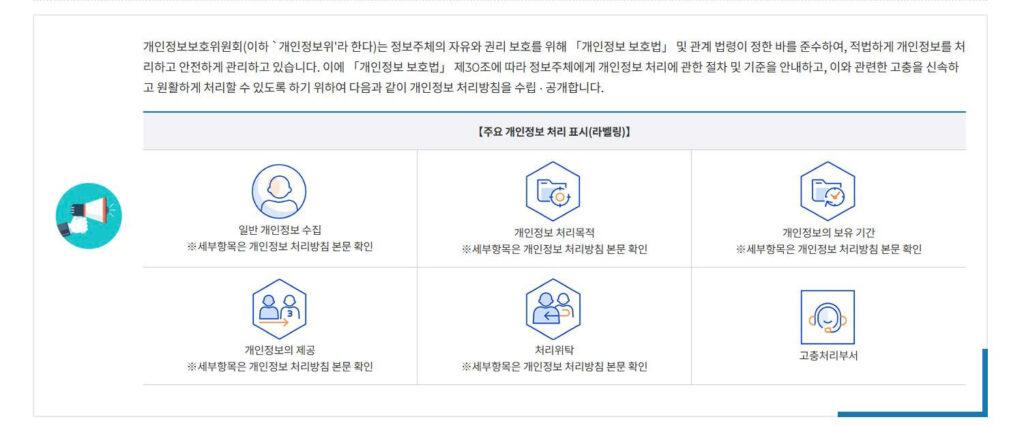
The Korean Personal Information Protection Commission, or PIPC, presents these topics as separate parts of a privacy policy, including collection purposes and items, retention periods, third-party provision, outsourced processing, automatic collection tools, deletion, user rights, and policy changes. This is also a useful reading order for ordinary users.
Six Questions Matter More Than the Introduction
First, make sure the policy applies to the website, app, or service you are actually using. A company may publish one privacy policy for several products, so some information may apply only to certain services.
Instead of reading every paragraph, use Ctrl+F or Command+F. On a Korean page, search for terms such as 수집 항목, 처리 목적, 보유기간, 제3자 제공, 처리위탁, 국외이전, 파기, and 권리. On an English page, useful terms include collect, purpose, share, service provider, retention, delete, cookies, and rights.
| Question | What you should find |
|---|---|
| What is collected? | Account details, contact information, payment data, device information, location, cookies, activity records, or uploaded content |
| Why is it collected? | Account operation, payment, delivery, security, analytics, marketing, personalization, or AI improvement |
| Who receives it? | Affiliates, payment companies, delivery companies, cloud providers, advertisers, or other partners |
| Is it sent overseas? | The country, recipient, purpose, method, and retention period |
| How long is it kept? | A fixed period, until account deletion, or according to a clearly explained condition |
| What can you do? | Access, correction, deletion, processing suspension, consent withdrawal, or cookie controls |
The opening paragraphs usually contain broad promises. The sections and tables answering these six questions are more useful for deciding whether to use the service.
A Data List Only Makes Sense Beside Its Purpose
Privacy policies usually describe information from three sources. The first is information you enter yourself, such as your name, phone number, delivery address, profile, messages, photographs, or payment details. The second is information created while you use the service, such as an IP address, device information, cookies, access records, searches, clicks, and location data. The third is information received from another company, such as a social-login provider, payment company, or business partner.
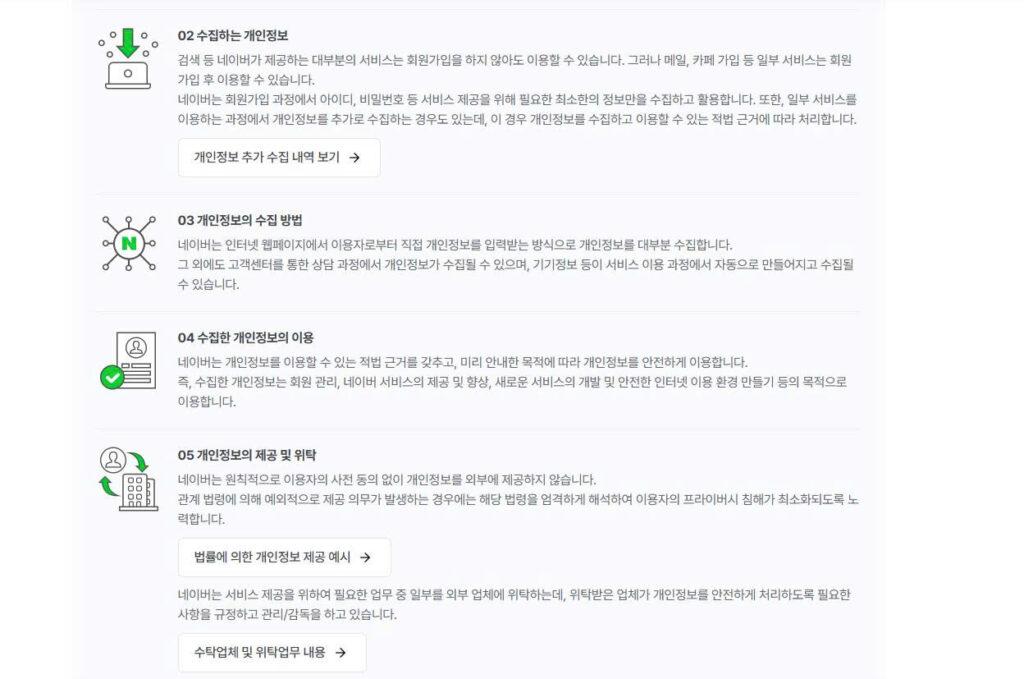
NAVER’s Privacy Center, for example, separately explains information collected during registration, additional information collected through particular services, and information generated automatically during service use. Its examples of automatically generated information include IP addresses, cookies, usage records, device information, location information, images, and voice information.
Do not judge a policy only by the number of data categories. Ask whether each category has a clear connection to the service. A shopping website can reasonably require a delivery address. A navigation service may need location information. A simple newsletter has a less obvious reason to request continuous precise location or access to your contacts.
Broad phrases such as “other information you provide” are not automatically improper, but they give the reader little useful detail. Look for a service-specific table or a linked page that explains which information is required, which is optional, and what function each item supports.
The word “shared” can hide several very different arrangements. For Korean services, the most important distinction is between third-party provision, outsourced processing, and overseas transfer.
Third-party provision generally means another organization receives data for its own stated purpose. A policy should identify the recipient, the purpose, the data involved, and how long the recipient keeps it.
Outsourced processing means another company performs work for the original service, such as delivery, payment processing, cloud hosting, customer support, or message delivery. NAVER’s privacy explanation distinguishes these two relationships: third-party provision serves the recipient’s purpose, while outsourcing allows a contractor to perform work for the original company.
Overseas transfer needs a separate reading. Under Korean privacy guidance, overseas transfer can include providing data to an overseas recipient, allowing overseas access, outsourcing processing abroad, or storing data outside Korea. The policy should explain the receiving country, recipient, data items, purpose, transfer method, retention period, and any available refusal procedure.
A sentence such as “we may share information with trusted partners” is not enough to understand the real data flow. Search for a detailed recipient list, an outsourcing table, or a separate overseas-transfer notice.
Retention Tells You What Remains After You Leave
The retention section explains what happens after you stop using the website. Do not look for only one general period. Account details, payment records, customer-service messages, security logs, uploaded files, advertising data, and backups may all follow different schedules.
A useful policy gives either a fixed period or a clear event. Examples include deletion when the account is closed, when a transaction is completed, when a stated retention period expires, or after a legal storage obligation ends.
NAVER states that it deletes information after the collection and use purpose has been completed, while retaining certain information when the user has agreed to a separate period or when applicable law requires storage. Its policy also separates account withdrawal, service termination, and expiration of an agreed retention period as deletion situations.
Do not assume that deleting an app deletes the account or the company’s server records. Look for a separate membership-withdrawal or account-deletion procedure. Also read what happens to backups, purchase records, dispute records, and security logs.
The phrase “as long as necessary” may be reasonable when the policy explains how necessity is determined. When no criteria are provided, use the privacy contact listed in the policy and ask which period applies to your account or data category.
A Right Is Useful Only When You Can Exercise It
A privacy policy should not merely say that users have rights. It should provide a working route for using them.
In Korea, an individual may request access to personal information, correction or deletion, and suspension of processing. The request may be submitted to the organization holding the information or through services provided by the Privacy Portal. Legal restrictions can apply, so a deletion request does not always require every record to disappear immediately.
Look for an account privacy page, request form, customer-service menu, email address, telephone number, or privacy officer. Identity verification is normal when a company needs to prevent another person from accessing or deleting your information, but the procedure should still be clear and practical.
The Korean Privacy Portal provides a process in which the user identifies the relevant website or personal-information file, selects access, correction, deletion, or processing suspension, completes the request, and tracks its submission.
A policy is less useful when it describes rights in detail but gives no functional form, contact address, or account setting through which those rights can be exercised.
Common Questions
No. The service may still send information to cloud providers, payment companies, delivery services, analytics tools, affiliates, advertisers, or overseas contractors. The third-party provision, outsourcing, cookie, and overseas-transfer sections should be read separately.
Does deleting an account erase everything immediately?
Not necessarily. Some records may remain for a stated payment, security, dispute, legal, or backup period. The policy should explain which categories remain and why.
Is a short privacy policy better than a long one?
Not automatically. A short policy may be clear, but it may also omit important details. A longer policy can be easier to use when it includes readable tables, service-specific explanations, direct links, and working control tools.


